
Disclosure: Product links in this guide go to Etsy and may be affiliate links, so we may earn a small commission if you buy, at no extra cost to you. We chose them from current listings and haven’t tested them. AI tools helped research and draft this guide.
Winter is one of the best times to start feeding birds in Ontario. Natural food gets scarce, and birds like chickadees, nuthatches and woodpeckers will visit a well-placed feeder through the coldest months. This checklist covers what to offer, where to put it, how to keep it clean and how to protect birds from windows.
1. Know who’s likely to visit
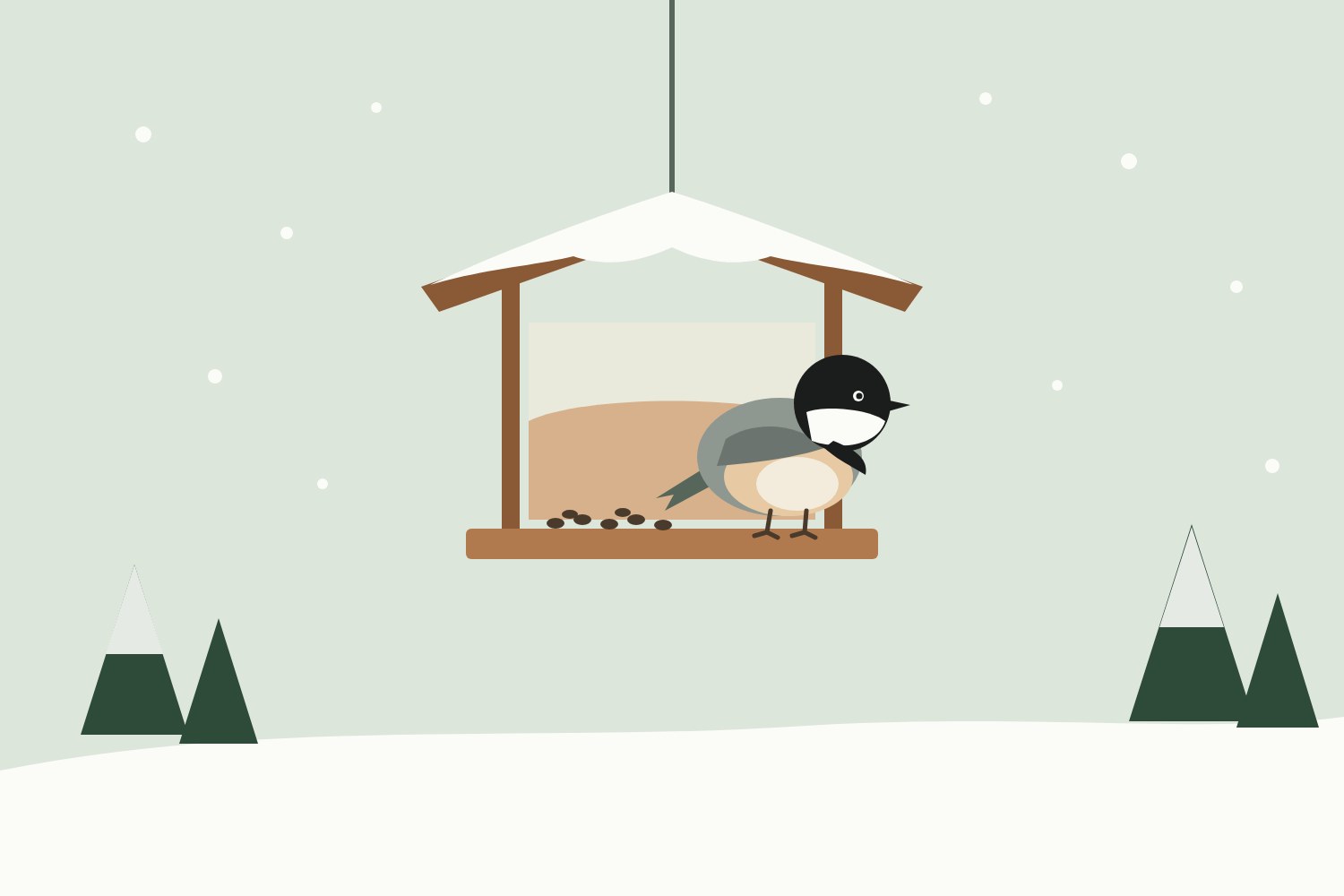
In Project FeederWatch’s 2000–01 counts for the Great Lakes region, the most frequently reported feeder birds included Black-capped Chickadee, Blue Jay, Mourning Dove, Downy Woodpecker, American Goldfinch, Dark-eyed Junco, Northern Cardinal and White-breasted Nuthatch (FeederWatch). Farther north, winter finches such as Evening Grosbeak, Pine Grosbeak and redpolls can show up (Ontario FeederWatch Cam).
Want help with names? An Ontario backyard bird photo guide is a printable digital set, and the Ontario Bird Sticker Book from a Toronto shop lets kids build their own field guide.
2. Choose the right food
- Black-oil sunflower seed is the most common feeder seed in North America and attracts cardinals, chickadees, finches and sparrows (FeederWatch). If you offer one food, make it this.
- Suet is high-fat food for insect-eating birds like woodpeckers and nuthatches. It can go rancid in heat, so winter is the easiest season to offer it (FeederWatch).
- Nyjer draws goldfinches, Pine Siskins and redpolls, and needs a tube or sock-style finch feeder (Audubon).
3. Pick a feeder that matches the food
Handmade cedar feeders are a good fit for a cottage or cabin yard. A few current options from a B.C. woodworker:
- A cedar suet feeder for woodpeckers and nuthatches
- A cedar seed feeder, or the large cedar feeder if you’d rather refill less often in cold snaps
- A deluxe cedar feeder with two suet cages that offers seed and suet in one station
For a no-hardware start, a snowman-shaped edible seed feeder from an Ottawa maker is moulded seed, nuts and fruit (it contains peanuts and gelatine). More tube, window and camera feeders will be added to this guide later.
4. Place it close to a window, not far from it
This surprises many people: Birds Canada recommends putting feeders within 3 metres (10 ft) of a window, and closer is better. At that distance, a bird leaving the feeder can’t build up enough speed to be badly hurt if it hits the glass (Birds Canada).
5. Make your windows visible to birds
Birds see reflections as open sky or trees. Mark the outside of the glass with tape, dots or markers in a grid about 5 x 5 cm (2 x 2 in) (Birds Canada).
6. Keep feeders clean
Clean seed feeders about every two weeks, and more often in heavy use, wet weather or if sick birds appear. Use soap and hot water or a solution of no more than 1 part bleach to 9 parts water, rinse well, let dry, and clear away hulls under the feeder (All About Birds).
7. Keep cats indoors
Birds Canada estimates free-roaming cats kill about 60 million birds a year in Canada, and recommends keeping cats indoors or in a catio (Birds Canada).
8. Give birds a place to nest in spring
Winter is a good time to put up a birdhouse so it weathers before nesting season. Two Canadian-themed options: an O Canada birdhouse and a maple-leaf toon birdhouse 3D-printed in Burlington.
For the bird lover on your list
Stationery is an easy add-on: an Ontario bird card bundle from Guelph, or a single chickadee letterpress card.